
Beginner Houseplants That Are Hard to Kill (And What They Quietly Teach You)
There is something humbling about bringing home your first houseplant.
You don’t really know the light in your home yet.
You don’t know how dry your air runs in winter.
You don’t know how often you’ll realistically remember to water.
Most beginner plant advice makes it sound simple… just give it sunlight and don’t overwater.
But light isn’t one thing.
Watering isn’t one schedule.
And homes aren’t greenhouses.
So instead of starting with the prettiest plants or the trendiest ones, let’s start with the forgiving ones.
The beginner-friendly houseplants that tolerate inconsistent watering.
The low-maintenance indoor plants that won’t collapse while you’re still learning your rhythm.
The ones that are genuinely hard to kill.
Plant care is the practical part.
What they reveal in the process is something else entirely. Because the way something survives tells you what it prioritizes.
And if you’re paying attention, it often reflects something about how you’re living, too.
5 Beginner House Plants That Are Hard To Kill
1. Snake Plant (Sansevieria)
One of the most genuinely low-maintenance indoor plants for beginners.
If you’re searching for easy houseplants for beginners, the snake plant earns its reputation.
It tolerates low light better than most indoor plants (though it will grow faster in bright, indirect light).
It prefers to dry out completely between waterings.
Its thick, upright leaves store moisture, which makes it resilient to missed waterings.
Overwatering is usually the only real threat.
It’s structured.
Upright.
Contained.
It’s not a showy plant, but a beautiful one.
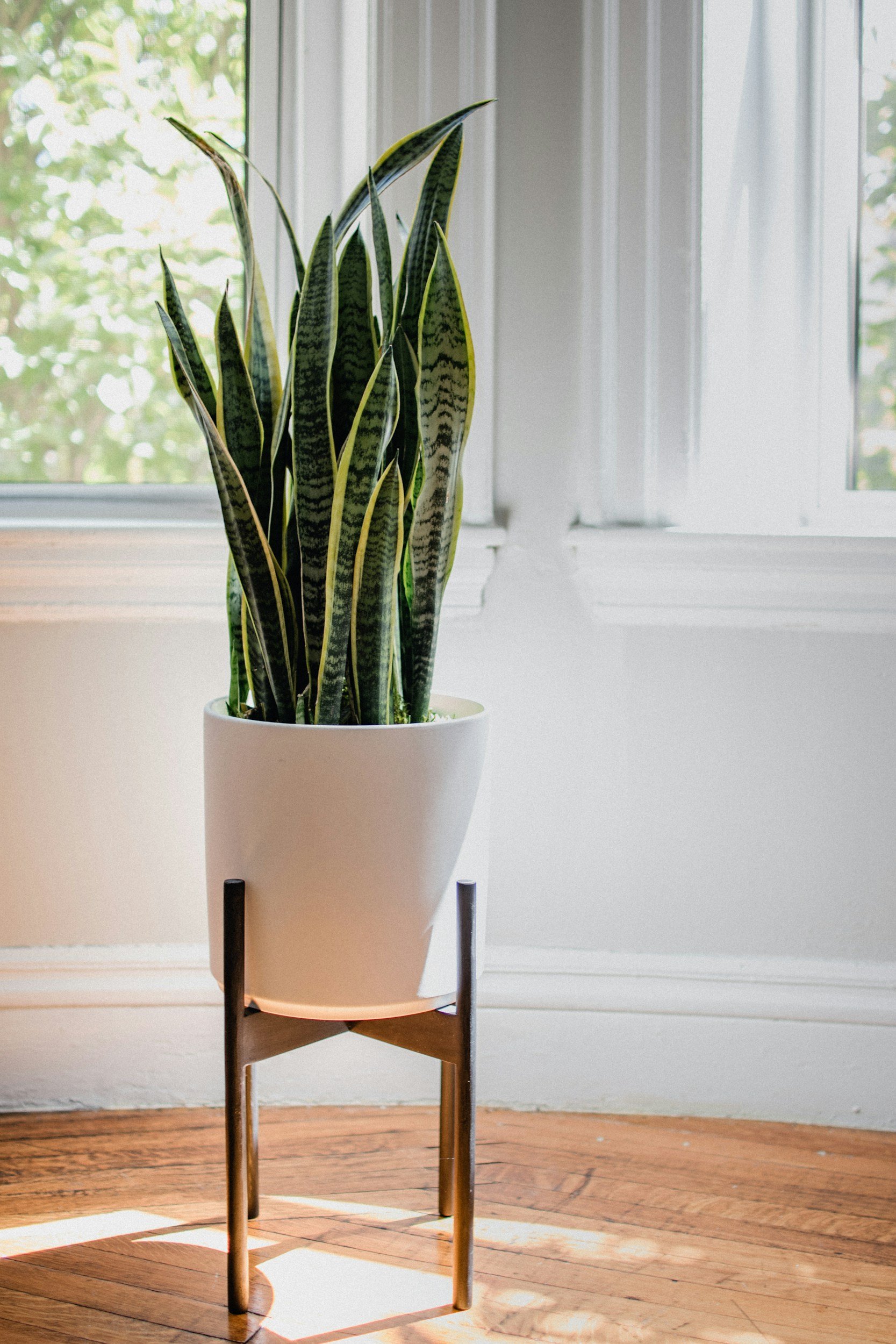
What the snake plant reflects:
Snake plants grow slowly.
You won’t see a dramatic weekly change. It will grow inches over months at a time with subtle thickening and slight height.
New shoots will emerge quietly near the base of the plant.
It’s the kind of growth you notice only if you’ve been paying attention.
There are seasons in life that move like that.
When you’re repairing pieces of your life privately.
When you’re building strength, no one applauds.
When you’re choosing steadiness over visibility.
From the outside, it might look like nothing is different.
But beneath the surface, roots and stability are tightening their hold.
The snake plant doesn’t rush to look impressive.
It prioritizes structure first.
That’s a pace we rarely honor.
2. Pothos (Epipremnum aureum)
Adaptable, responsive, and almost impossible to offend.
Pothos is often recommended as one of the best beginner houseplants, and for good reason.
It tolerates low light but thrives in bright indirect light.
It shows visible signs when it needs water (slight drooping).
It propagates easily from cuttings placed in water.
If you prune it, it grows back fuller.
It responds.
It doesn’t require precision. It requires attention.
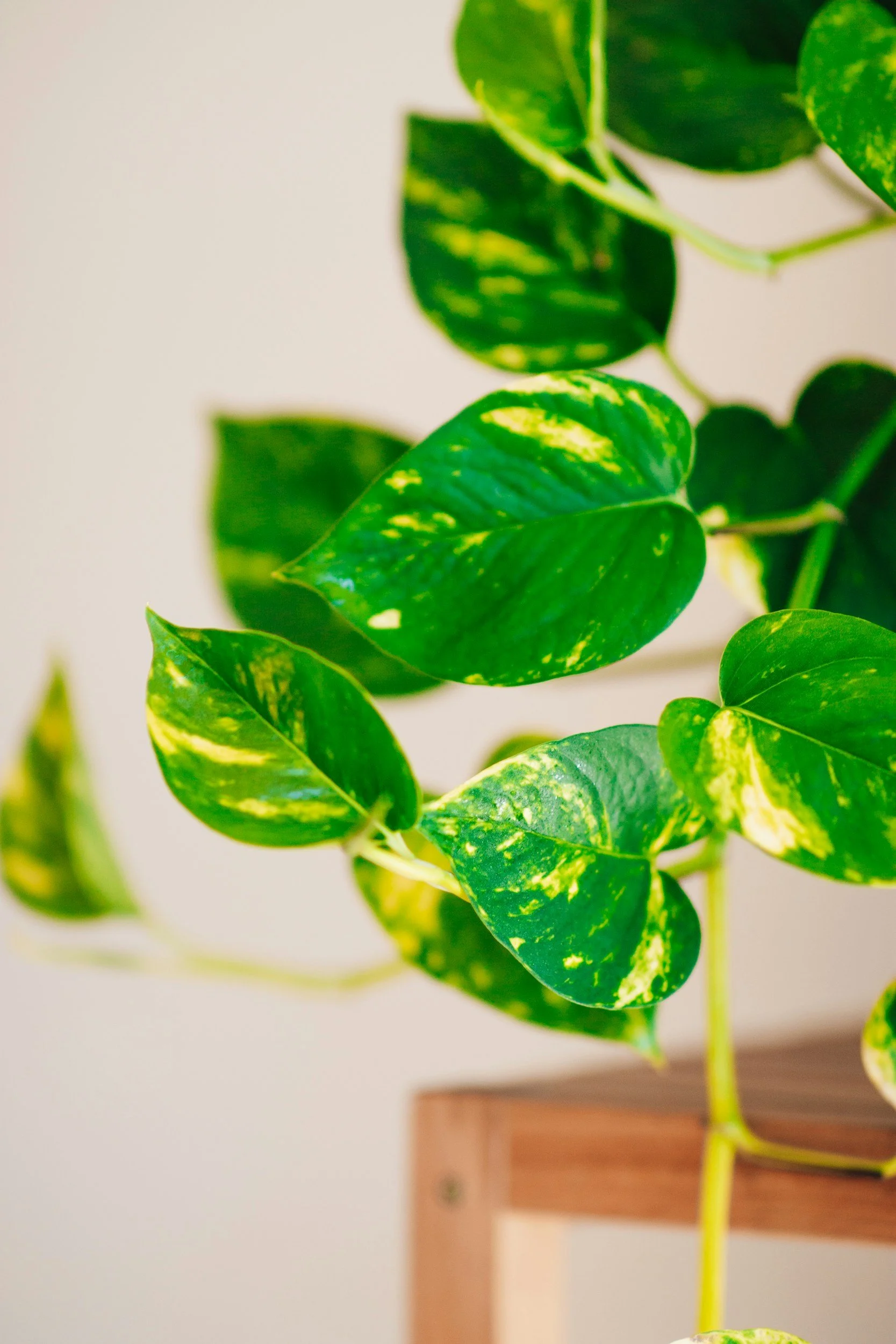
What the pothos reflects
When you trim a pothos vine, it branches.
It doesn’t shrink back. It doesn’t stall. It redirects growth. There’s something instructive about that.
We tend to interpret reduction as failure.
🌿 Scaling back feels like falling behind.
🌿 Saying no feels like losing ground.
🌿 Pruning commitments feels like shrinking.
But sometimes reduction creates density.
🌿 Leaving a job that was draining you.
🌿 Reducing your schedule to protect your health.
🌿 Allowing a friendship to shift instead of forcing it.
What grows back isn’t smaller. It’s more aligned. Pothos doesn’t cling to every inch of vine.
It adjusts, continues, and doesn’t sweat the small stuff.
3. ZZ Plant (Zamioculcas zamiifolia)
Designed for survival.
If you want a truly hard-to-kill houseplant, the ZZ plant consistently earns its place on the list.
It tolerates low light.
It handles dry indoor air.
It prefers to dry out completely between waterings.
And beneath the soil, it stores water in thick rhizomes that act as built-in reserves.
That storage system is what makes it resilient.
Even if you forget to water for a while, the plant isn’t immediately compromised. It relies on what it accumulated earlier.
It’s not delicate. It’s structured for fluctuation.
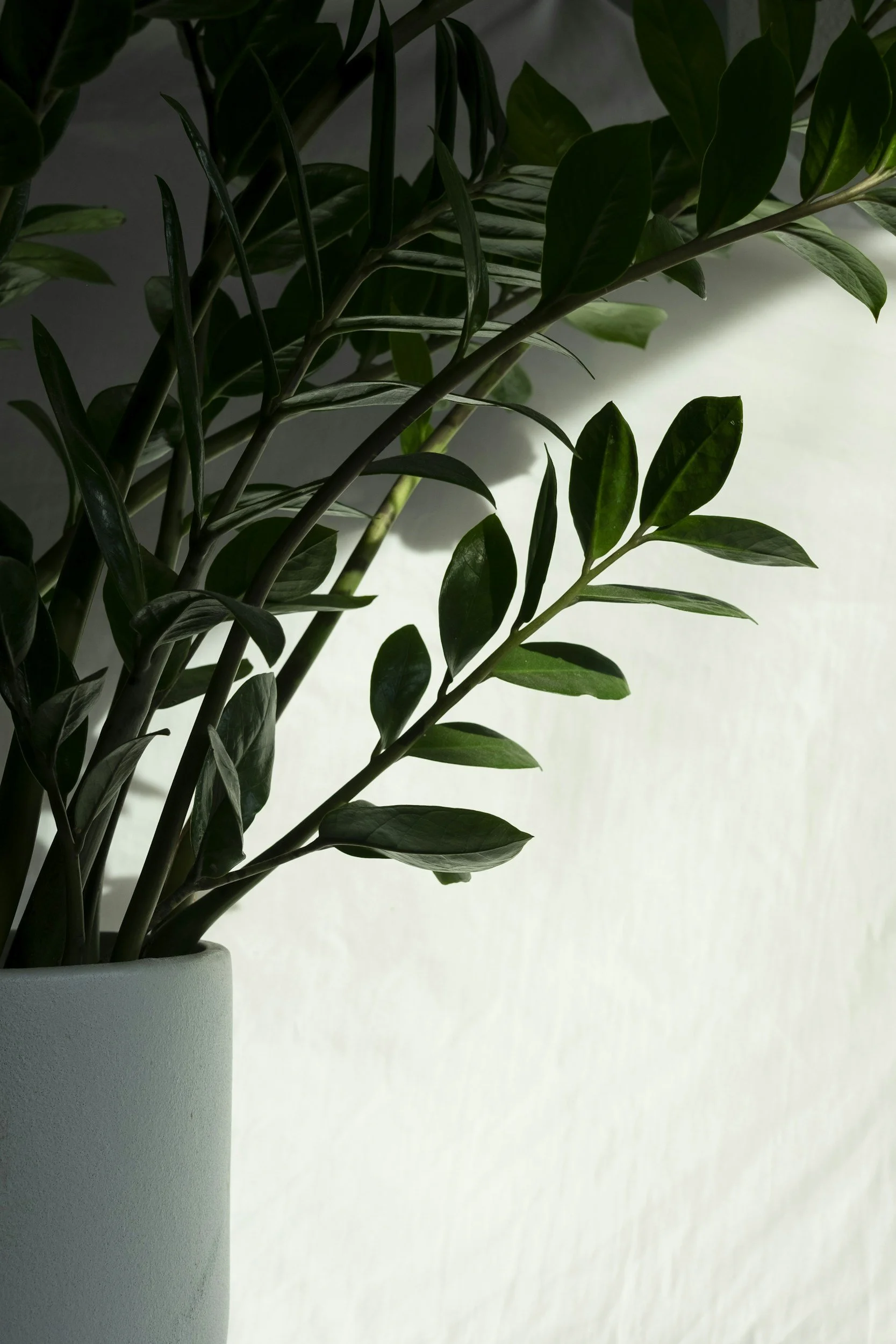
What the ZZ plant reflects
The ZZ plant withstands dry stretches because it built capacity when conditions were stable.
Its resilience isn’t reactive. It’s cumulative.
Over time, it stores enough to endure what would otherwise deplete it.
There are seasons in life that mirror that pattern for us, too.
🌿 Financial tightening.
🌿 Relational strain.
🌿 Creative fatigue.
🌿 Parenting exhaustion.
🌿 Health shifts that demand more than usual.
Some seasons arrive whether we prepared for them or not.
The ZZ plant reflects the quiet work of building reserves before they’re urgently needed.
🌿 Emotional reserves are built through consistent reflection.
🌿 Relational reserves are built through regular connection.
🌿 Financial reserves built through budgeting and small, steady savings.
🌿Physical reserves are built through sleep, nourishment, and pacing.
It doesn’t survive because it pushes harder in the dry season.
It survives because it developed a structure that allowed it to endure one.
4. Peace Lily (Spathiphyllum)
Clear communication in plant form.
Peace lilies are often recommended as easy plants for beginners because they communicate clearly.
When they’re thirsty, they droop. When you water them, they lift, often within hours. However, you don’t want to overwater them as they can be prone to root rot.
Keep them in an aroid soil mixture to ensure breathing room for the roots.
Peace lilies also tolerate medium light and don’t require complicated care routines.
The feedback loop is immediate, which is very satisfying to a first-time plant parent.
You don’t have to guess if they are okay or not, they are clear communicators.
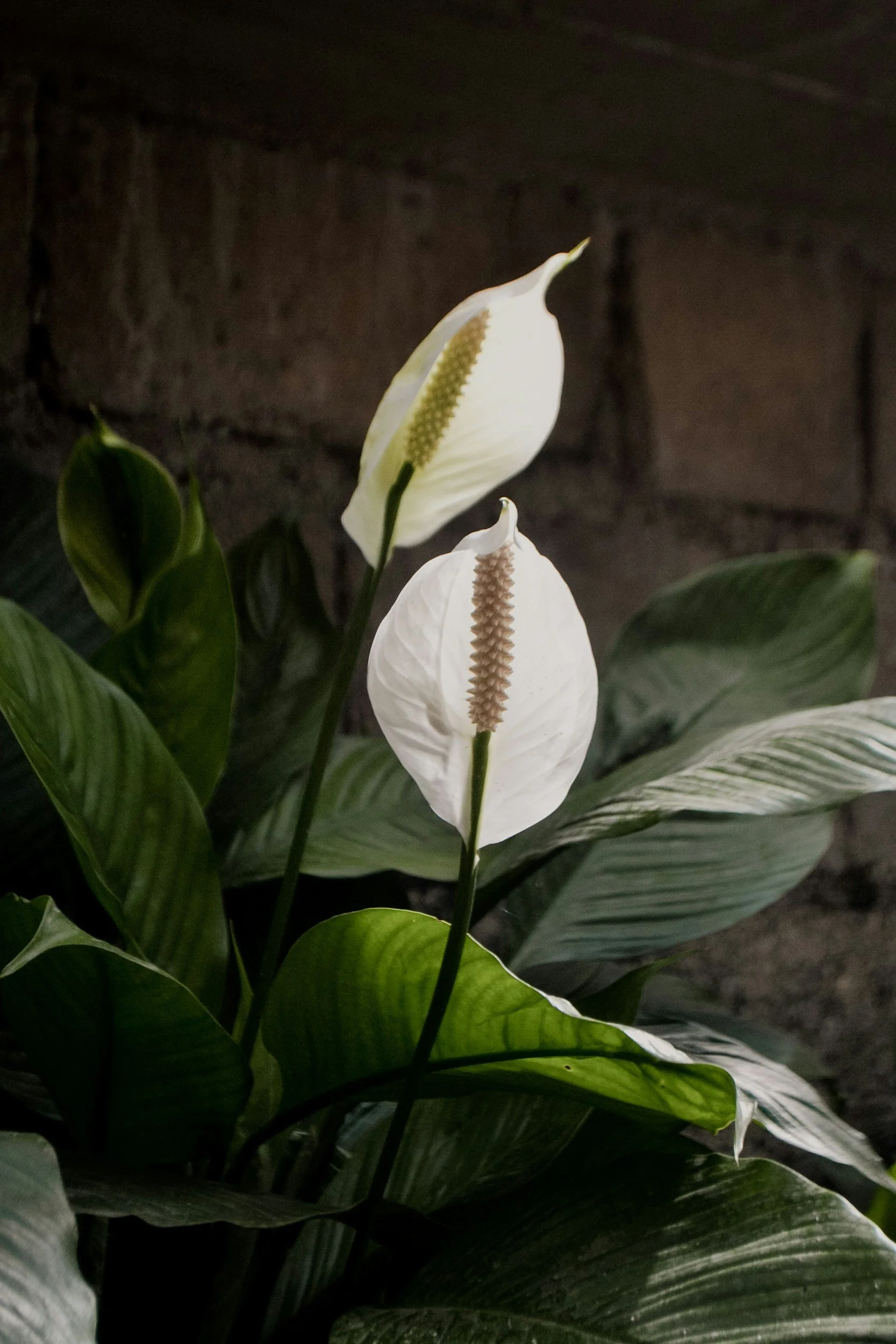
What the peace lily reflects
There’s something grounding about a plant that tells you what it needs.
It doesn’t fade slowly without warning.
It doesn’t pretend to be fine.
It signals.
And when you respond, it recovers.
In life, we often do the opposite.
🌿 We override exhaustion.
🌿 We minimize our needs.
🌿 We push through instead of pausing.
The peace lily reflects what happens when need meets response.
Expression.
Attention.
Repair.
Vitality returns.
It’s simple, but not simplistic.
5. Spider Plant (Chlorophytum comosum)
Expansion built on stability.
Spider plants are forgiving, adaptable, and visibly rewarding.
They tolerate varied light.
They recover easily from minor care mistakes.
They produce “babies” or small offshoots that can be replanted.
When healthy, they multiply.
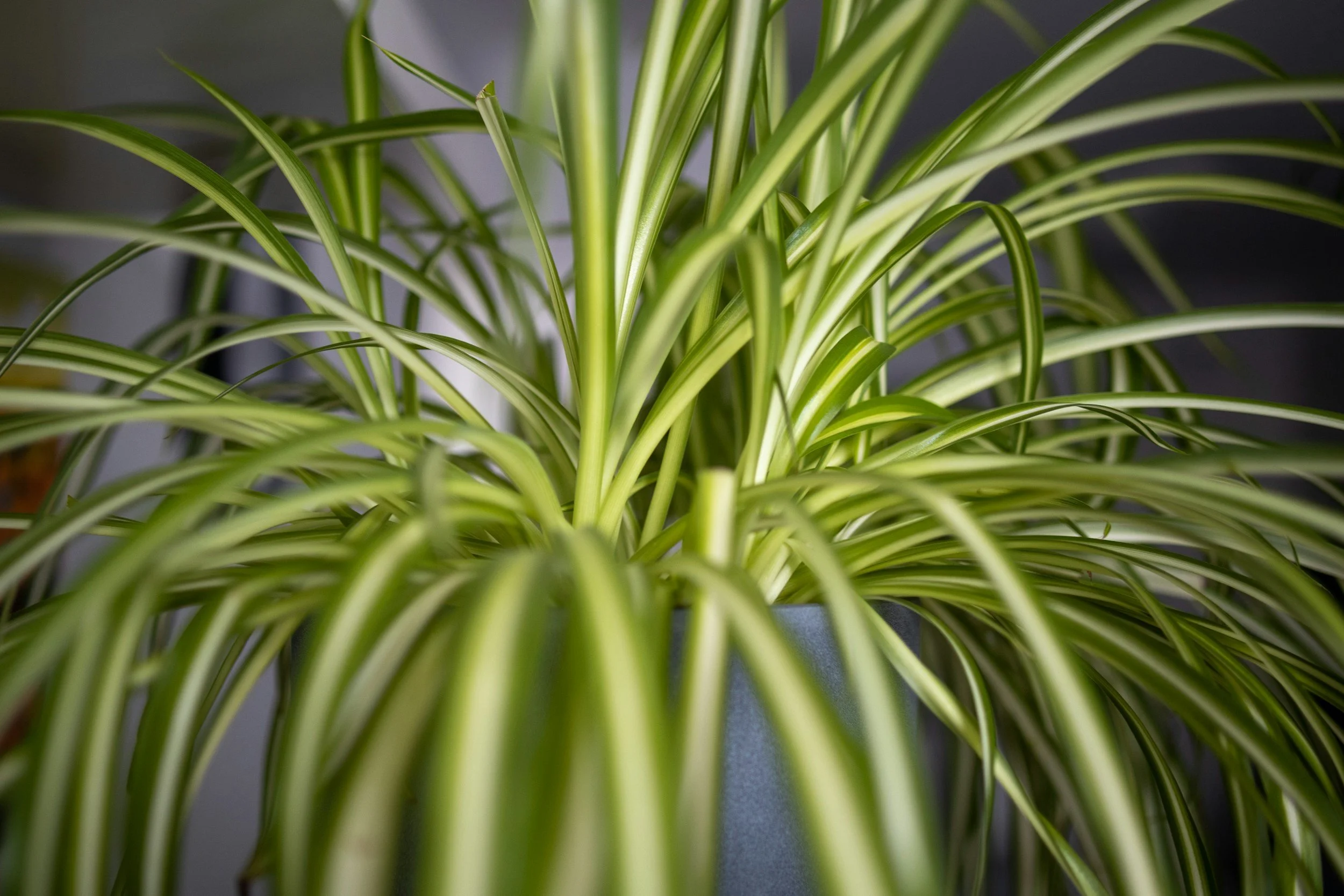
What the spider plant reflects
Spider plants don’t produce offshoots when they’re stressed. They expand when they’re stable.
We often try to multiply from depletion.
🌿 Add another commitment.
🌿 Grow the business faster.
🌿 Say yes before we’ve rested.
I know I’m guilty of all of these, but expansion without stability creates strain.
Spider plants build outward only after their roots are secure.
In life, that might look like:
🌿 Strengthening daily rhythms before adding more.
🌿 Repairing your health before expanding your workload.
🌿 Deepening connection before chasing bigger milestones.
🌿 Creating margin before creating momentum.
Overflow isn’t forced. It follows a grounded, safe, and secure system.
How to Keep Beginner Houseplants Alive
(Without Overcomplicating It)
If you’re new to indoor plants, here’s what really matters:
Most beginner plants die from overwatering, not underwatering. Overwatering is usually a frequency issue, not a volume issue. It’s less about how much water you give at once and more about how often you’re giving it.
As a beginner, it’s safer to let the soil dry out fully before watering again. When you do water, don’t be afraid to water thoroughly, even taking the plant to the sink and soaking the soil completely. What most beginner plants struggle with isn’t a deep drink. It’s sitting in constantly damp soil.
Bright indirect light will influence your plant far more than fertilizer ever will. Most beginner plants struggle from insufficient light long before they suffer from a lack of nutrients.
And consistency matters more than intensity.
A steady rhythm of care will do more for a plant than occasional bursts of attention followed by long stretches of neglect.
You don’t need elaborate routines or specialty equipment to keep beginner houseplants alive.
You don’t need expensive grow lights in every room.
You don’t need to mist constantly unless the plant actually requires higher humidity.
What you need is observation.
Notice how quickly the soil dries in your home.
Notice how the leaves shift toward a light source.
Notice what changes gradually over weeks rather than days.
That’s plant care.
And if you step back, it’s also a practice in living more intentionally, responding to what’s happening instead of reacting out of habit.
A Final Thought
Caring for plants is rarely about mastering plants.
It’s about learning to notice, learning to adjust without overcorrecting, and building slowly instead of rushing.
If you’ve been craving something grounding, starting with one forgiving plant is enough.
Not because you’ll become an expert overnight.
But because tending something living, even quietly, can reorient your pace and influence your peace.
So pause. Breathe. And just BE.
